
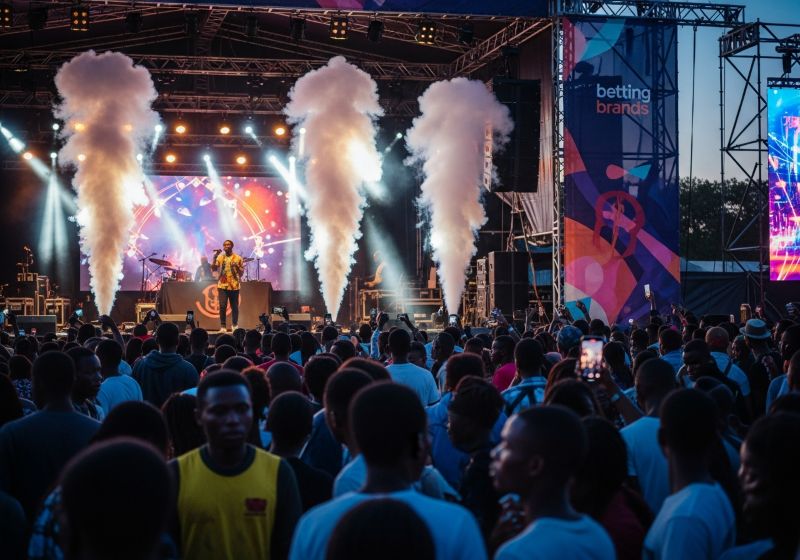
The role of betting companies has greatly increased in the entertainment industry after they expanded their sponsorship to football teams alone.
Usually, beverage and telecom companies took the lead in sponsoring artists in the music industry. Some artists from Zambia managed to secure contracts with such companies to produce jingles or promotional tracks for various products and offers.
As the betting industry kept growing fast in Africa, these companies started asking themselves why they could not try as well. Instead of sticking to product marketing, they are increasingly becoming the major sponsors of arts and music projects, extending their reach to other areas apart from sports and betting games like Aviator.
Artists and cultural promoters have always struggled to get sponsorship, but now things have become much easier for them (fortunately!).
A good example of this is the ZambianPlay platform, which managed to attract millions of users per month, thus providing an opportunity for musicians, especially for those just starting in their careers. Nevertheless, even with such progress being made regarding content distribution, funding production remains a major challenge for them.
Even though there have been some positive changes, access to resources is still pretty limited for many people in the music industry, and any effort to improve the situation should be welcomed.
In general, sponsorship does not only refer to direct financing of musical performances; it manifests itself through marketing strategies, organisation of festivals, and cooperation with local producers, among other ways. The fact is that music constitutes a great medium for sponsors since young audiences are keen consumers of music in urban environments.
There have already been several cases of gambling companies funding the music industry, not just in Zambia but in different African nations. More specifically, it has happened in
places where the music industry is less developed, and there is room for other organisations to step in and support the industry.
This is very positive because it allows many talented artists to take advantage of these
opportunities. It gives them the chance to change their lives by getting the support they need to succeed.
Undoubtedly, with more businesses getting involved, the number of chances to empower talent within Zambia will increase. The development of talent, in this case, also leads to the growth of the music industry, hence opening up further chances for artists.